Recent posts
Since the dawn of time, decision theorists have wondered why expected utility is the right way to evaluate options. Sure, it satisfies the usual axioms of decision theory, like von Neumann & Morgenstern’s independence axiom or Savage’s sure-thing principle. But so do other decision rules. For example, suppose there are three possible outcomes, with utilities $1$, $4$, and $9$. And imagine that you evaluate a gamble where the probabilities of these outcomes are, respectively, $p_1$, $p_2$, and $p_3$, using the following formula: $$ p_1 \sqrt{1} + p_2 \sqrt{4} + p_3 \sqrt{9}.... Read more
It’s only natural to place less trust in the judgment of those who disagree with you. After all, from your point of view, those people are mistaken! And making mistakes is a sign of incompetence. This kind of distrust is actually baked into a number of models in social epistemology (for example: here, here, and here). I gave an argument against the rationality of one such model in a previous post.... Read more
Academic philosophers have just been handed a golden ticket. And, as far as I can tell, we’re responding by looking around for the nearest garbage can to toss it away in. LLMs have made MPUs cheap as hell. With a little human guidance, you can crank out the kind of papers that make up 95% of what we publish in a few hours. Soon (already?), human guidance may not even be necessary.... Read more
Recent papers
-
Geometric Pooling: A User's Guide
British Journal for the Philosophy of Science
-
Jeffrey Pooling
Philosophers' Imprint
-
Updating on the Evidence of Others
Philosophical Studies
-
Belief in Psyontology
Philosophers' Imprint
-
Could've Thought Otherwise
Philosophers' Imprint
-
No Escape from Allais: Reply to Buchak
Philosophical Studies
-
Risk Writ Large
Philosophical Studies
Resources
- The Open Handbook of Formal Epistemology
- Odds & Ends: An Open Access Introduction to Probability & Inductive Logic
- Wi-Phi videos on The Preface Paradox and Bertrand’s Paradox
- Scarab — The Hugo theme for this site
About
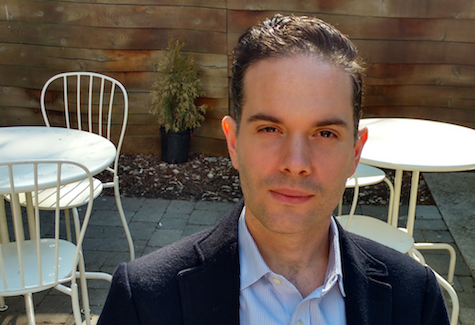
Associate Professor of Philosophy at the University of Toronto. Researching knowledge, probability, and decision-making. Indulging in programming and related nerdery.